Business Loans
Fixed vs Variable Business Loans
Compare fixed and variable business loan rates, including payment predictability, potential savings, and the risks of changing rates.

OnlineLoans.org is a comparison marketplace, not a lender. We may earn compensation from partners featured on this site, which can affect placement. Editorial content is informational and is not financial, legal, or professional advice.
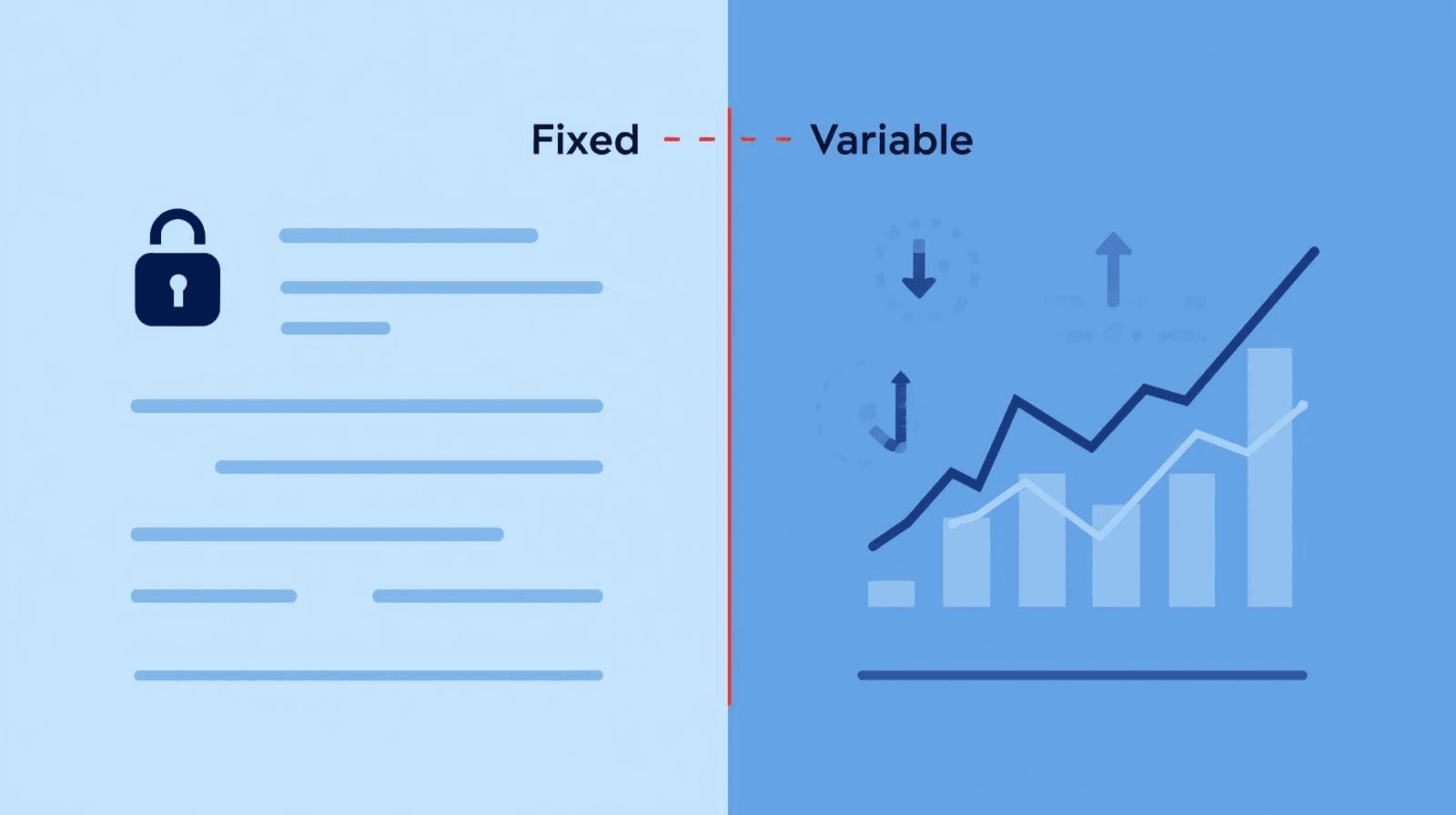
This is one of the most common questions small business owners ask when shopping for financing. The answer depends on your lender, loan type, and what you qualify for. Let me break down both options so you can make the right choice for your business.
Question (from a small business owner)
Hey everyone, I'm in the process of getting a business loan to expand my operations and I keep seeing these terms "fixed rate" and "variable rate" everywhere. I'll be honest, I'm not totally sure what the difference is or which one I should go with.
My business has been running for about 3 years now, and things are going pretty well. I need to borrow around $50k to open a second location. The thing is, I really need to know exactly what my monthly payment will be so I can plan my budget properly. I've heard horror stories about payments suddenly going up with variable rates, but I also don't want to overpay if I don't have to.
Can someone explain the actual difference between fixed and variable rates? And which one makes more sense for someone like me who needs predictable payments? Any advice would be really appreciated.
Answer (from a small business finance expert)
Great question. The difference comes down to whether your interest rate stays the same or changes over time. Here's what you need to know:
Fixed-rate small business loans
A fixed-rate loan locks in your interest rate for the entire loan term. Your monthly payment stays exactly the same from start to finish, which makes budgeting straightforward.
- Predictable payments every month
- Easier to manage cash flow
- No surprises if market rates spike
- Usually starts with a slightly higher rate compared to variable loans
- You won't benefit if rates drop
Say you take out a $50,000 loan at a 10% fixed rate for 5 years. Your payment amount stays the same every month—around $1,062—no matter how market rates change. You can set this in your budget and forget about it.
Variable-rate small business loans
A variable-rate loan adjusts based on market conditions. Most lenders tie it to a benchmark like the prime rate or SOFR (Secured Overnight Financing Rate). When rates go down, your interest rate and payment can decrease. When rates go up, your payments may increase.
- Potential savings when rates are low
- Often starts with a lower initial rate
- Uncertainty—payments can rise if interest rates increase
- Harder to budget long-term
- Could cost more if rates climb significantly
If your loan's interest rate is prime + 2% and the prime rate rises from 7.5% to 8%, your new interest rate becomes 10%. That increases your monthly payment, which could strain your cash flow if you weren't prepared for it.
Which option is better for most small businesses?
For most small business owners, especially those planning long-term finances, a fixed-rate loan offers peace of mind. You know exactly what you're paying each month, which makes cash flow management much simpler.
Choose a fixed-rate loan if you prefer stability and predictability. This is especially true for SBA loans and traditional term loans where you're committing to a longer repayment period.
Choose a variable-rate loan if you can handle fluctuating payments and want to benefit from possible rate drops. This might work if you have strong cash reserves or your revenue is highly seasonal and you can pay more during good months.
Bottom line: if you need something predictable so you can plan your budget—which sounds like your situation—go with a fixed rate. The slightly higher initial rate is usually worth it for the peace of mind and budgeting certainty.
Summary
Small business loans can be either fixed or variable. Fixed-rate loans keep the same interest rate for the entire term, making payments predictable and easier to budget. Variable-rate loans adjust based on market conditions, offering potential savings when rates are low but creating uncertainty if rates rise. For most small business owners, especially those planning long-term finances, a fixed-rate SBA or term loan offers the best balance of predictability and peace of mind.
Frequently asked questions
Get answers to common questions about fixed and variable rate business loans.
Sources
Primary references used to review this article: